


Table of Contents
- Step 1: Tell the Difference Between Dry and Dehydrated Skin
- Step 2: Build a Daily Skincare Routine for Dry Skin
- Step 3: Apply Products to Damp Skin for Maximum Absorption
- Step 4: Choose the Best Ingredients for Skin Barrier Repair
- Step 5: Adjust Your Environment and Water Habits
- Step 6: Support Hydration From the Inside
- Common Mistakes That Keep Dry Skin From Improving
- Frequently Asked Questions
Last Updated: September 28, 2026
Step 1: Tell the Difference Between Dry and Dehydrated Skin
The difference between dry and dehydrated skin comes down to what's missing: dry skin lacks oil, while dehydrated skin lacks water. If you want to know how to hydrate dry skin daily, start here. Most people treat the wrong problem for months.
Dry skin is a skin type. It produces less sebum, so it feels rough and tight. Dehydrated skin is a temporary state. It can affect anyone, even oily skin, and it shows up as dullness, fine lines, and a crepey texture.
Here's the part most guides miss: you can be both at once.
Quick check:
- Dry skin: flaky patches, rough texture, feels tight after washing
- Dehydrated skin: dull look, faint lines that appear and fade, feels tight but not flaky
- Both: rough AND dull, with oil in some zones and tightness in others
American Academy of Dermatology guidance on dry skin
Step 2: Build a Daily Skincare Routine for Dry Skin
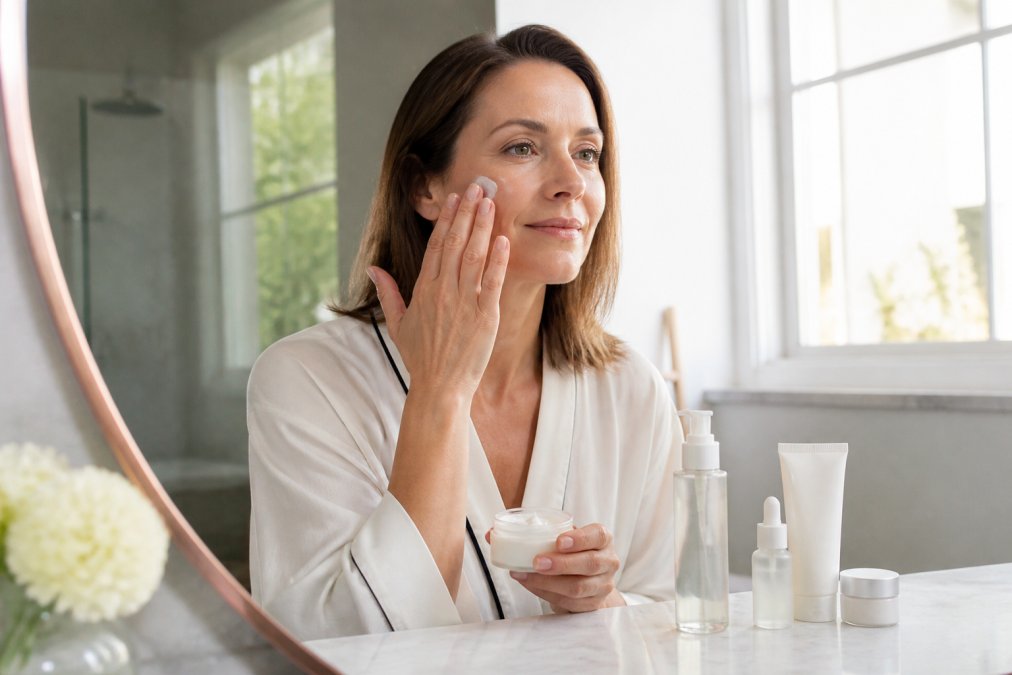
A daily skincare routine for dry skin works best when it stays simple and consistent. Two short routines, morning and evening, beat a ten-step program you abandon by week two.
Morning Routine: Protect and Prep
Morning is about protection. Keep it to three or four steps.
- Rinse with lukewarm water or a gentle cleanser
- Apply a hydrating serum to damp skin
- Seal with a moisturizer
- Finish with sunscreen
Evening Routine: Repair and Replenish
Evening is when skin repairs itself. This is your chance to rebuild.
- Remove sunscreen and grime with a non-stripping cleanser
- Apply a humectant serum while skin is still damp
- Layer a moisturizer with ceramides
- Add a facial oil or occlusive on very dry nights
Step 3: Apply Products to Damp Skin for Maximum Absorption
Applying products to damp skin is the single easiest upgrade you can make. It takes zero extra time and changes how well everything else works.
In practice, this means:
- Cleanse, then lightly pat dry, leaving skin slightly damp
- Apply your serum within 60 seconds
- Follow with moisturizer to seal it in
Step 4: Choose the Best Ingredients for Skin Barrier Repair
The best ingredients for skin barrier repair fall into three groups: humectants, emollients, and occlusives. Each does a different job, and you need all three for lasting hydration.
Humectants, Emollients, and Occlusives: What Each One Does
Humectants pull water into the skin. Look for glycerin, hyaluronic acid, and panthenol.
| Ingredient Type | What It Does | Examples | Best For |
|---|---|---|---|
| Humectants | Pull water into skin | Glycerin, hyaluronic acid | Dehydrated, dull skin |
| Emollients | Soften and smooth | Ceramides, botanical oils | Rough, flaky skin |
| Occlusives | Seal moisture in | Squalane, shea butter | Very dry, tight skin |
Ingredient Interactions to Avoid
Some combinations cancel each other out. This is where most routines go wrong.
- Retinol plus strong acids: both speed up cell turnover. Together they strip the barrier. Use them on different nights.
- Vitamin C plus benzoyl peroxide: the peroxide can oxidize the vitamin C, so neither works well.
- Layering two humectants with no occlusive on top: water evaporates. You need a seal.
Step 5: Adjust Your Environment and Water Habits
Your environment drains moisture from skin all day. Fixing it is often faster than fixing your products. But the right fix depends on where you live and the conditions you face. Most guides stop at "use a humidifier", here's how to adapt your routine to your actual climate.
Water Habits: The Non-Negotiables
Start with water. Hot showers strip lipids from the skin. Keep them short and use lukewarm water instead. This one change helps more than most serums. Pat dry after washing and moisturize within a minute, water habits and hydration go hand in hand.
Climate-Specific Strategies
High altitude (above 5,000 feet): The air is thinner and holds less moisture. UV radiation is also stronger, which further weakens the barrier. You need a heavier occlusive at night and sunscreen with higher SPF during the day. A humidifier in the bedroom is not optional here, it's essential.
Indoor Humidity: The Sweet Spot
Run a humidifier in winter and in air-conditioned rooms. Keep indoor humidity around 40-50% if you can. Don't sit directly under heating or AC vents. Add a humidifier to your bedroom for overnight recovery.
Step 6: Support Hydration From the Inside
Internal hydration supports skin hydration, but it isn't a magic fix on its own. Drinking water helps your body function. It doesn't travel straight to your face. What does help is a steady intake and water-rich foods, but the real leverage comes from understanding how diet interacts with your skin barrier and topical routine.
The Science of Inside-Out Hydration
Your skin is the last organ to receive water when you're dehydrated. The body prioritizes vital organs first. So if you're chronically under-hydrated, your skin suffers. But chugging water won't instantly plump your face, it takes consistent intake over days.
Dietary Habits That Actually Move the Needle
- Omega-3s: Found in salmon, sardines, walnuts, and chia seeds. These support the lipid barrier and may reduce inflammation. Aim for two servings of fatty fish per week or a supplement if you don't eat fish.
- Antioxidants: Berries, green tea, and dark chocolate help defend against environmental stressors that weaken the barrier.
- Zinc and vitamin C: These support collagen production and skin repair. Found in nuts, seeds, citrus, and bell peppers.
- Limit alcohol: It's a diuretic and can dehydrate skin. If you drink, alternate with water.
A Simple Daily Target
- 6-8 glasses of water, more in heat or after exercise
- One or two servings of water-rich fruit or veg
- Omega-rich foods a few times a week
- Limit alcohol, which is dehydrating
How Diet Interacts With Your Topical Routine
Here's the part most guides miss: what you eat can either support or sabotage your topical products. For example, a diet high in sugar and processed foods can promote inflammation and break down collagen, undermining your barrier repair. Conversely, a diet rich in antioxidants and healthy fats can enhance the effects of your moisturizer.
This won't replace your moisturizer. It works alongside it.
Common Mistakes That Keep Dry Skin From Improving
Most dry skin routines fail for the same handful of reasons. Fix these and progress speeds up.
- Over-cleansing: washing twice a day with a strong cleanser strips the barrier. Once at night is often enough.
- Skipping sunscreen: UV damage weakens the barrier and speeds water loss.
- Using fragrance-heavy products: fragrance is a common irritant, especially for sensitive and atopic skin.
- Exfoliating too often: it removes the very cells holding moisture in.
- Applying products to dry skin: humectants need damp skin to work.
- Changing products every week: the barrier needs weeks to recover. Give a routine time.
National Eczema Association on fragrance and sensitive skin
Frequently Asked Questions
What is the fastest way to rehydrate dry skin?
Apply a humectant-rich product like a glycerin or hyaluronic acid serum to damp skin immediately after washing, then seal it with a moisturizer containing ceramides or botanical oils. This layering approach reduces transepidermal water loss and delivers hydration within minutes. Drinking water helps internal hydration but won't fix a compromised skin barrier on its own. For quick relief, a fragrance-free sheet mask or a thick overnight cream can also restore suppleness while you sleep.
How do I know if my skin is dry or dehydrated?
Dry skin lacks oil and feels rough, flaky, or tight year-round. Dehydrated skin lacks water and can feel tight even when it looks oily, with more noticeable fine lines and dullness. A simple test: if your skin feels oily in the T-zone but tight elsewhere, it's likely dehydrated. If it's consistently rough and flaky regardless of hydration, it's dry. Both benefit from a daily skincare routine for dry skin that includes gentle cleansing, humectants, and barrier-supporting moisturizers.
Can dry skin go away naturally?
Dry skin can improve naturally if the cause is temporary, such as cold weather or dehydration. However, chronic dryness often signals a weakened lipid barrier that needs consistent care. Supporting the skin barrier with ceramides, fatty acids, and occlusives helps it retain moisture over time. Without barrier repair, dryness tends to return. A daily routine that includes gentle cleansing and moisturizing on damp skin gives your skin the best chance to recover and stay comfortable.
What should I drink for very dry skin?
Water is the most direct way to support internal hydration, but adding water-rich foods like cucumber, watermelon, and citrus to your diet also helps. Some evidence suggests that collagen-rich broths and green tea with antioxidants may support skin elasticity. Avoid excess alcohol and caffeine, which can contribute to dehydration. Internal hydration matters, but it works best alongside topical application of humectants and emollients that keep water in the skin where it's needed.
Dry skin rarely improves from one product. It improves from a routine you can actually keep. The challenge is consistency, not complexity.
Pompom Skincare makes that easier. Our fragrance-free creams, omega-rich botanical oils, and lightweight fast-absorbing formulas slot into the exact steps above. They lock in moisture, strengthen the skin's natural barrier, and restore softness without a heavy residue.
Get started with Pompom Skincare and build a daily routine your skin can rely on.